Ingredients· 2 min read
Astaxanthin: The Red Algae from Iceland
A tiny red microalgae, grown in Iceland, gives us one of the most researched antioxidants in skin science. Here is how we use it in Moon Magic.
Words: Iris Laxdal
In Iceland, in tanks of clean, cold water, a tiny microalgae turns a deep red. That colour is astaxanthin, and it has become one of the ingredients we reach for most when we want to support skin through everyday stress.
Where our astaxanthin comes from
Astaxanthin is a natural pigment, the same one that gives wild salmon its colour. Ours comes from microalgae cultivated here in Iceland.
What it does for skin
Astaxanthin is best known as an antioxidant. In skincare, that means:
- Support against everyday stress. It helps neutralise free radicals from the environment and supports skin's natural resilience.
- Visible hydration. It works alongside skin's moisture barrier, leaving skin feeling plump and comfortable.
- Smoother-looking skin. With regular use, it helps soften the look of fine lines.
- A more resilient feel. It supports the look of elasticity, so skin looks and feels steadier day to day.
A tiny amount of astaxanthin goes a long way, which is why so little of it is needed.


Astaxanthin and bakuchiol, together
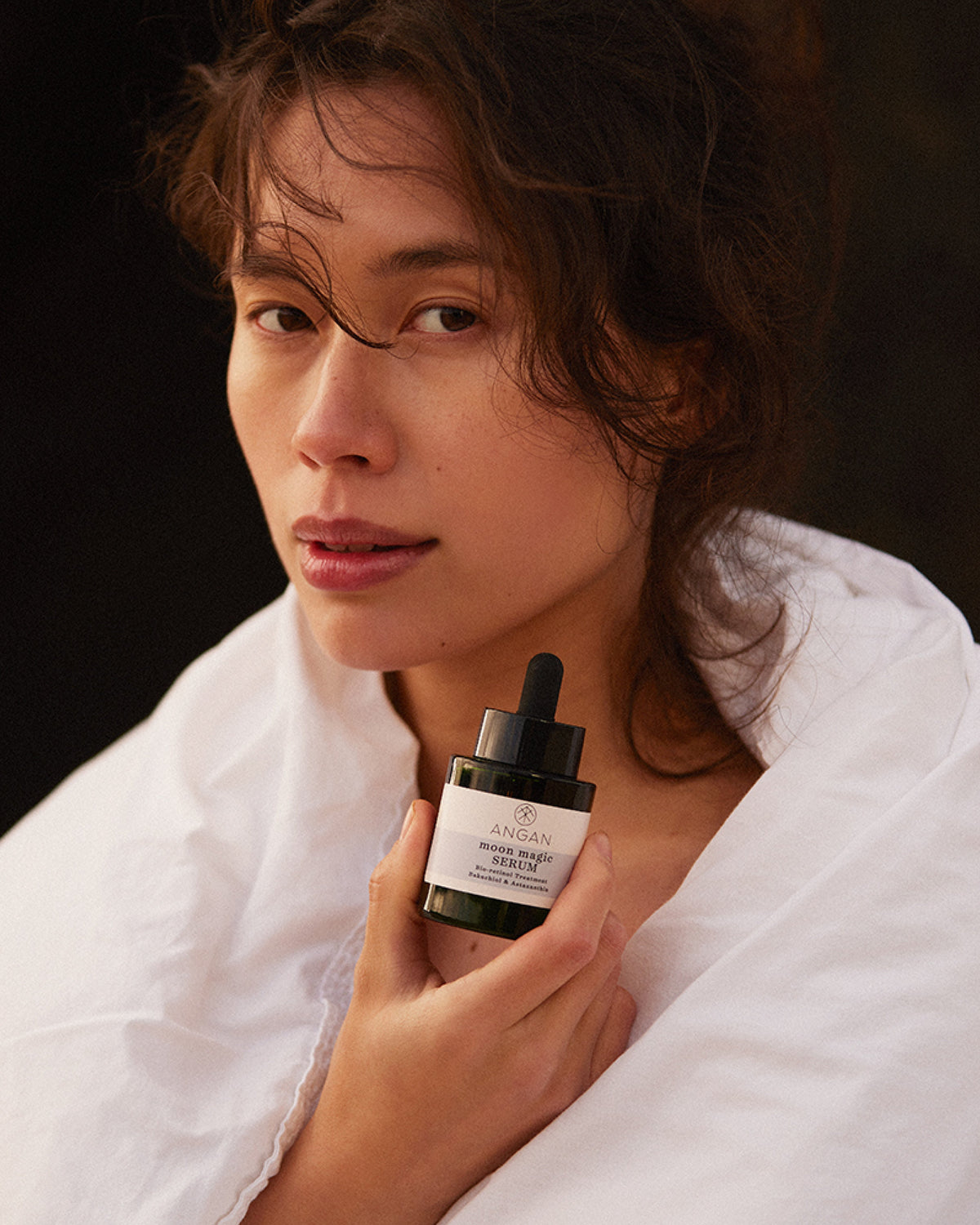
We paired astaxanthin with clinically studied bakuchiol, our plant-based alternative to retinol, in the Moon Magic Bio-Retinol Serum. Bakuchiol helps visibly soften the look of fine lines overnight, astaxanthin brings its antioxidant support, and rosehip CO2 extract adds nourishment. A few drops cover a lot of ground.
A quiet kind of skincare
There is nothing loud about astaxanthin. It does not foam or tingle. What you will notice, over time, is skin that feels steadier and looks a little more at ease. Use Moon Magic in the evening on clean skin, before your moisturiser or face oil, and give it a few weeks.
The research
Astaxanthin is one of the most researched carotenoid antioxidants in skin science. A systematic review of clinical studies on the ingredient found it supported several markers of skin, including the look of fine lines, elasticity and moisture (systematic review, Journal of Clinical Medicine).
In this story